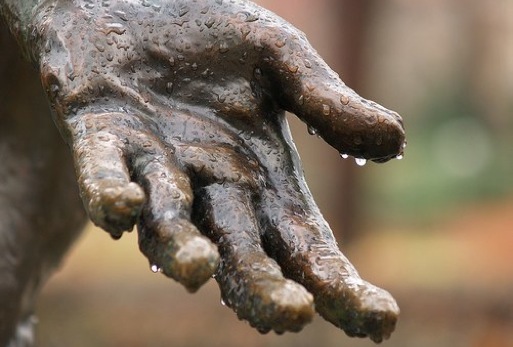
The hand of Jean de Fiennes from Rodin’s Burghers of Calais:
This sculpture commemorates Les Bourgeois de Calais, heroes of the Hundred Years’ War between England and France and symbols of French patriotism.
It is a collection of six statues, each depicting one of the men who volunteered to sacrifice themselves to save their city. Jean de Fiennes was the youngest of the six burghers and the 5th to volunteer. His statue depicts him with arms outstretched and mouth open.
According to the 14th century Chronicles of Jean Froissart, King Edward the III of England had laid siege to Calais, an important French port city on the English Channel. After 11 months, the people of the city were desperately short of food and water. In order to save the town, six of its leading citizens offered to surrender themselves to King Edward to be executed in exchange for the freedom of their city.
Rodin chose to portray the Burghers as they leave the city, believing they are going to die. The statue was unique in that it was not the usual monument to Victory, rather, it was a tribute to heroic self-sacrifice.
The Burghers represent the notions of self-sacrifice to the greater good and humane justice. Rodin depicts the Burghers as vulnerable and conflicted, yet heroic in the face of their imminent demise. Each of the six figures, through posture and facial expression, depicts distinct reaction to their sacrifice: despair, resignation, quiet defiance.
Ultimately, King Edward’s pregnant wife, Queen Philippa, persuaded her husband to spare the Burghers believing their deaths would be a bad omen for their unborn child. I consider The Burghers of Calais to be Rodin’s most moving and powerful work.
 Northeast Hand Specialists, LLC